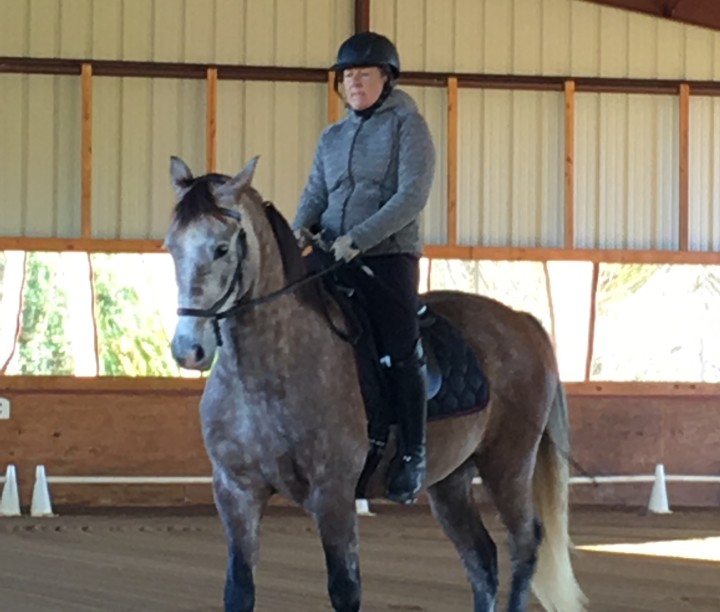
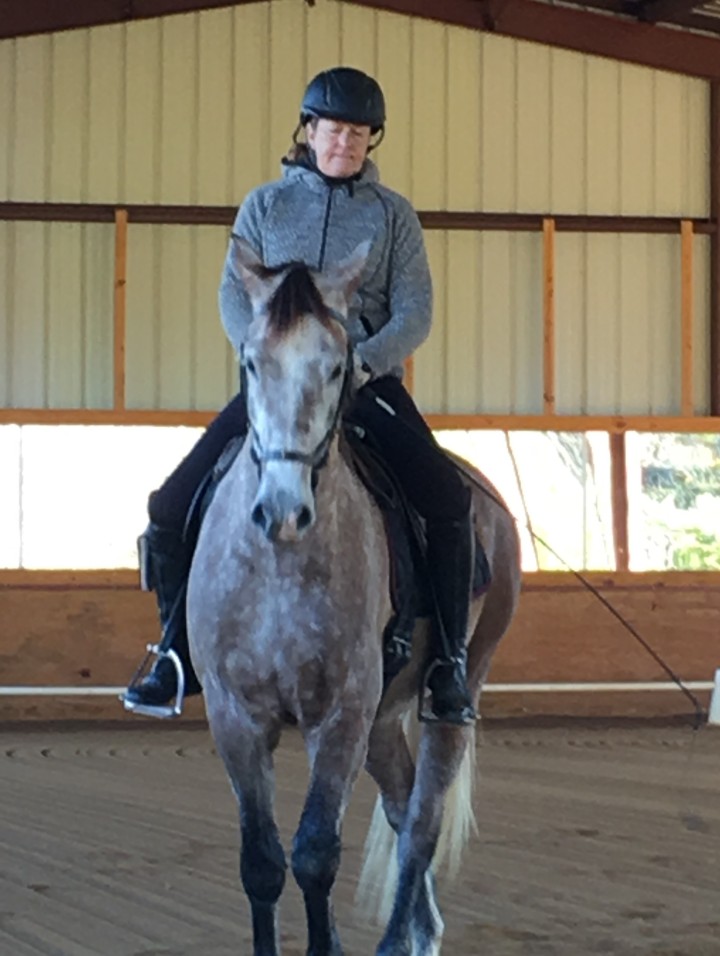
The shoulders are a very important part of the riding equation, they should mirror the position we are asking the horse to be in.
For example; if we are asking the horse to bend, our chest should be slightly facing the inside of the circle. The inside shoulder will be a little back and the outside shoulder, a little forward. We first start with the legs and seat to ensure our base is straight, then we have to look at the shoulders.
The tendency of the rider is to follow the horses’ balance, if the horse is falling in, the rider will adopt a position that follows that. This means the rider will often advance the inside shoulder and pull back the outside shoulder. This is the opposite position we want when we are asking the horse to bend.
It is this position that has such a large impact on our horse, whether we are influencing or following.
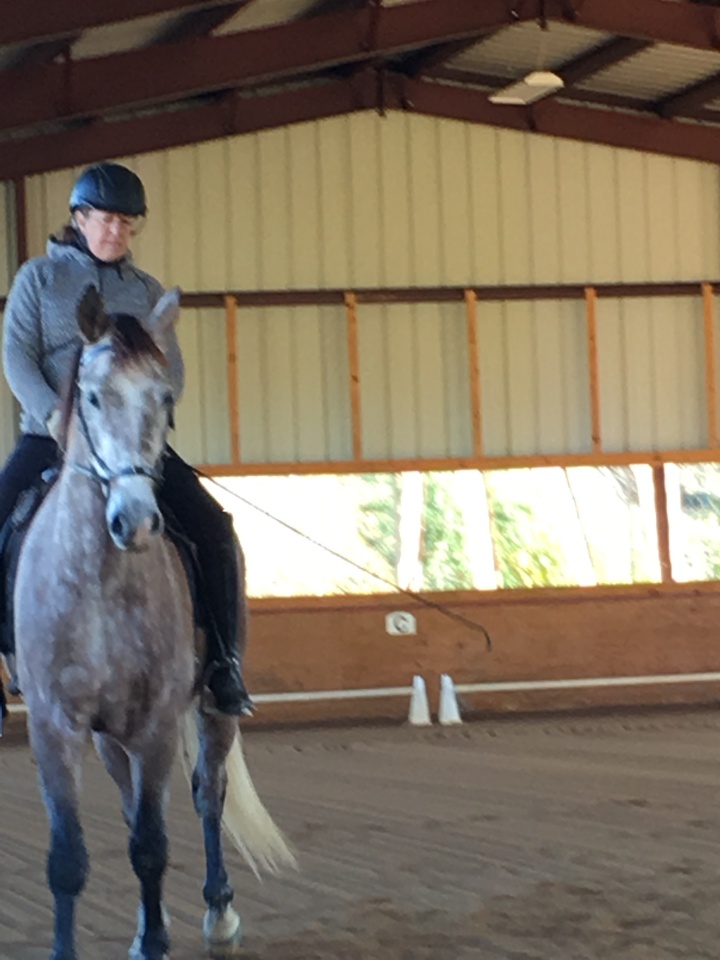
Here are a few examples:
It is from the second position that the horse will respond to the leg by coming under with the inside hind.
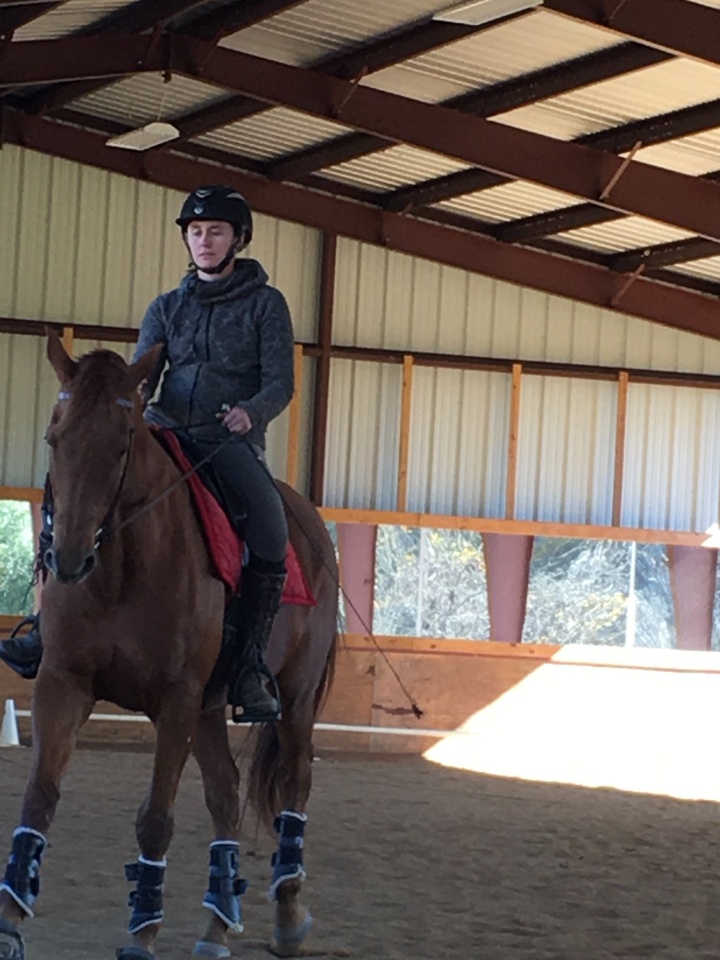
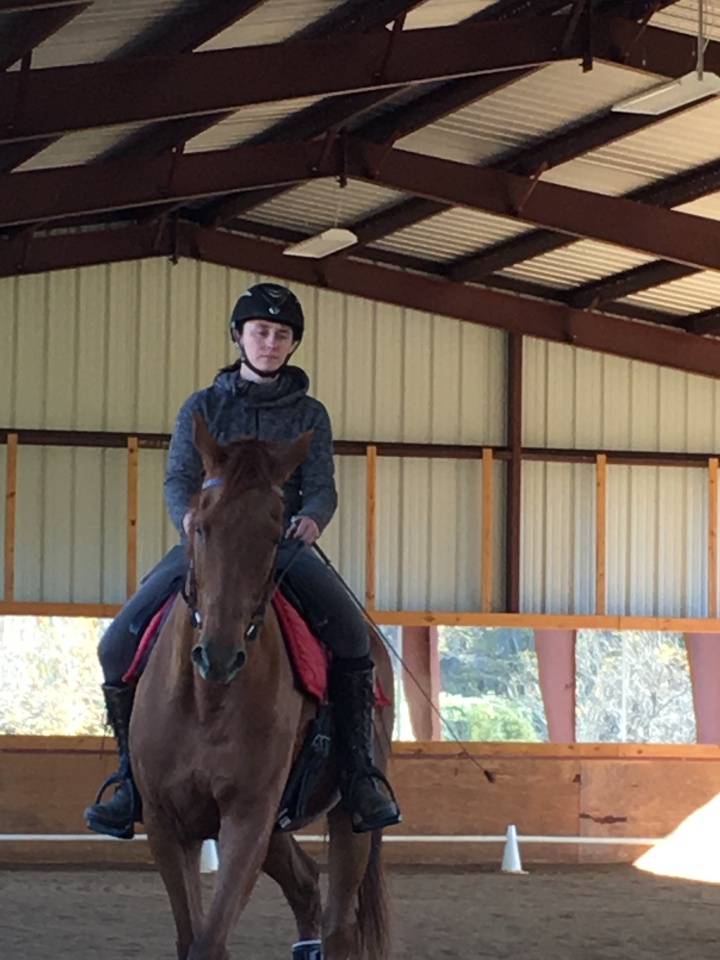
Here is another rider:
Note the difference in the yield on the inside of the horse from the first picture to the second.
How did we get this change? I use a few different ideas to help the rider find an influencing position with the shoulders; pulling the inside shoulder back, advancing the outside shoulder, turning at the waist, pivoting the upper body in. Everyone is different regarding what words work for them to achieve this result. When in doubt, experiment!!
We can also influence the horse with our shoulders temporarily, to get the desired result. If the horse is having a hard time coming under on one hind leg or the other, pulling that shoulder back a little more, to help the horse understand, is very effective.
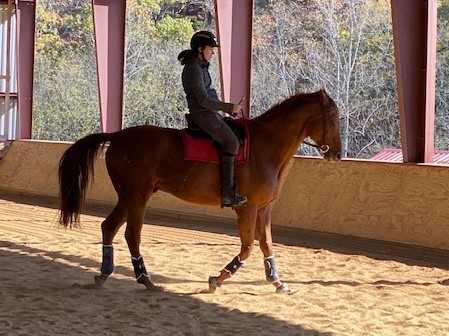
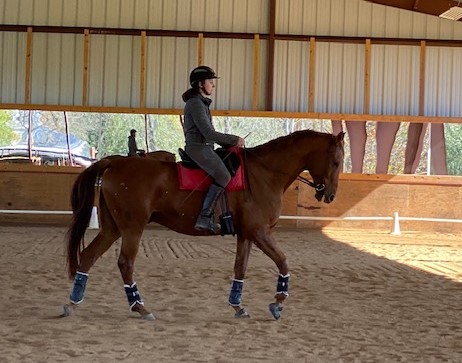
Here are a few examples:
While very effective, we have to be careful to not allow our base (weight and hips) to shift the outside and *remember, this is a temporary position to help the horse follow, not a regular way of riding.
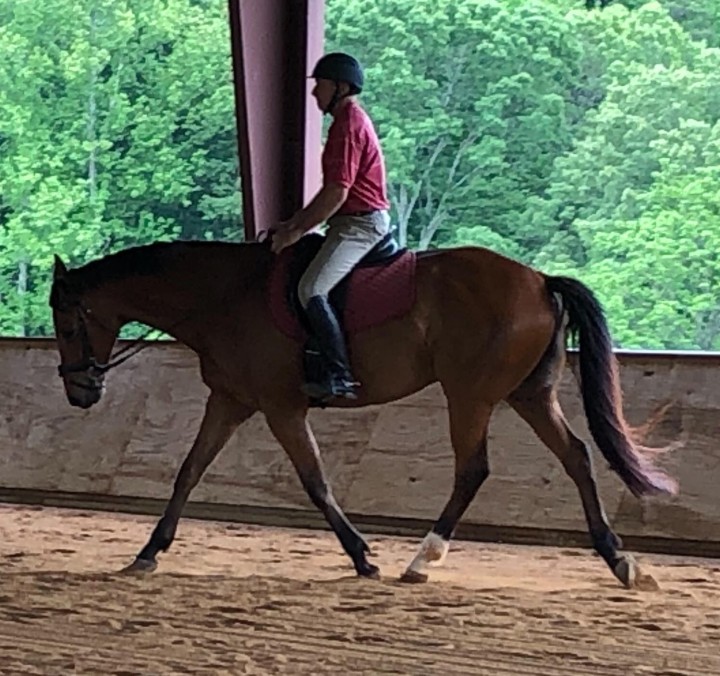
The next thought about the shoulders is the balance from front to back. The shoulders, hips, and heel must be in line. If the shoulders lean back, the leg comes forward, this creates tension in the rider and affects their ability to absorb the energy of the horse in the seat.
Here is an example of a rider leaning the shoulders back
Note the difference in the horses’ neck.
What we did: I gave the rider a visual of bringing the shoulders over the knees (she did not literally do that, it is an idea, to interrupted the leaning back). Then I had her bring her thigh back by opening the hip and placing the back of the thigh more on the saddle. This placed the leg more under the hip and discouraged the leaning back as well.
The shoulders leaning forward has the effect of closing the rider’s knees and thighs which blocks the energy of the horse in their back. It also places the rider’s weight over the wither and loads the shoulders. Here is an example:
You can see from the second picture, the rider is more in the center of the horse (front to back), this allows the horse much more freedom. We can then begin to think about asking the horse to lift the shoulders instead of loading the forehand. With this rider, we started with opening the thighs and sitting more on the bottom so the hip angle did not point down (toward the horse’s front feet) but rather up toward the horse’s head. This naturally realigned the shoulders over the hips and put him more in the center.
The shoulders are a very powerful aid, we can indicate to the horse they should follow or we can follow the horse’s balance (or imbalance). Our goal is to teach the horse to follow us, working on our own position is critical to our horse achieving what we ask for.
Thank you to all my students that contributed their photos!