HOW WE USE THE LEG TO SUPPORT OUR POSITION has a huge effect on our horse. If the lower leg (ankle and heel) are in contact with the horse all the time, it blocks the horse from coming through the top line. It is the upper calf (just below the knee) that supports the rider. As a young student, I heard “you need a straight line from shoulders, hips, heel.” This matters because the leg must be under the hip to support the seat. From this position, the rider can follow (and then influence) the horses’ motion. In our attempts to keep the leg under our hip, the rider often pulls the lower leg in towards the horse. Or the lower leg is continually pushing to make the horse go.
This is a problem because it tightens the rider’s leg and lifts the seat out of the saddle. This effectively breaks the connection between the seat and the horses’ back. In this position we can not connect our seat to the motion of the horse, instead, it blocks the motion in the horses’ top line.
Here are a few examples of different rider tendencies:
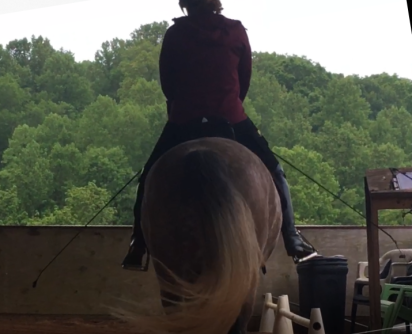
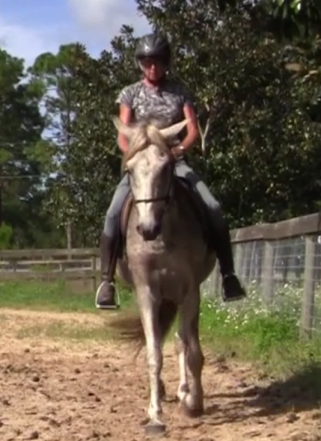
This rider pulls the heel up and in with the toe pointing down and back, a video of this rider working on changing this is below.
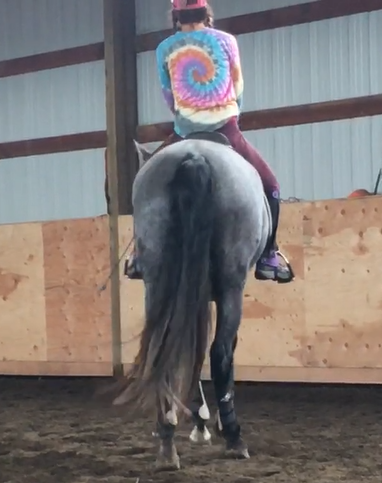
This rider turns the toe out and holds more in the ankle than the heel.
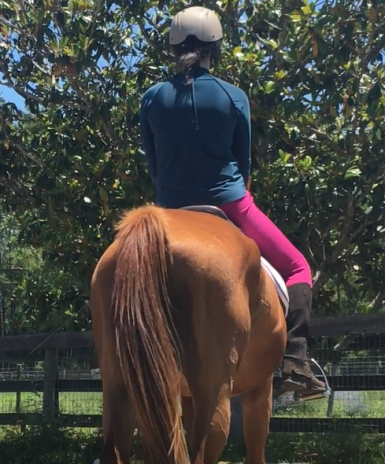
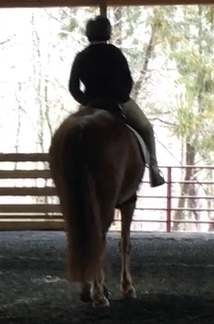
This rider shortens the whole leg because the right hip is higher. The correction has to come from the hip and thigh angle to lengthen the leg.
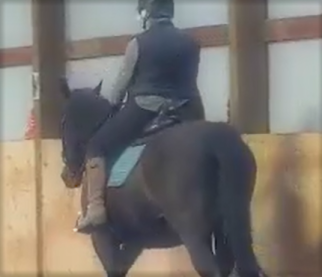
This rider is holding with both the ankle and heel, it is because she is closed in the thigh and knee. The solution is to open the knee, put the back of the thigh on the saddle and relax the lower leg away and down.
This is what we are looking for in the lower leg:
This position provides a solid base for the rider to maintain their balance and allows the seat to follow and connect with the motion of the top line.
Another rider with a shorter leg on a larger horse:
Next are videos of a few riders working on releasing the lower leg and bringing the leg under the seat:
This rider had learned to jam her heel down to try to get a longer leg. That did keep the ankle and heel away from the horse but created a braced leg that pushed out in front of her. In this lesson, we discuss how to bring the leg under the seat without the ankle and heel coming into the horse.