Riding on the square can be very useful for both horse and rider to understand the balance needed to be successful with training.
There are many ways to use the square, in this article we will discuss using the square on the inside of our circle to help us understand what it means to lift the inside shoulder.
The horse by nature leans in when they turn, it is how they think. Once we put weight on their back and turn a circle, the natural tendencies of the horse do not work. The horse must learn to turn by lifting the inside shoulder instead of loading it. (See this article for a discussion about straightness in the horse http://wp.me/p97Zn7-4 )
When we longe, often the horse falls in towards us and runs very fast. This is caused by the horse leaning in while turning.
To begin to teach the horse to change how it naturally thinks, we as riders need to understand our goal. The square can help us understand this.
Longeing around the square provides both horse and rider a clear sense of what is going on. The rider can apply the aids to teach the horse to move the inside shoulder out but the added poles help make sure it happens (and make the rider aware of when it is not). It also helps the horse with a physical change based on pole placement.
Working shoulder in on the square is a favorite of mine. When we ask the horse to engage the inside hind, by instinct they will load the inside shoulder which results in the horse falling into the hand (toward the center of our circle). Using the square addresses the engagement of the inside hind (to outside rein) in the corner and then the straight line to the next corner so the horse yields the inside shoulder. Over time, combining both ideas for a connected shoulder in that sustains itself.
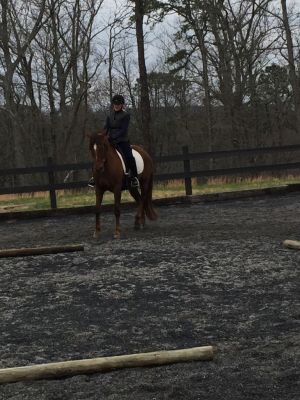
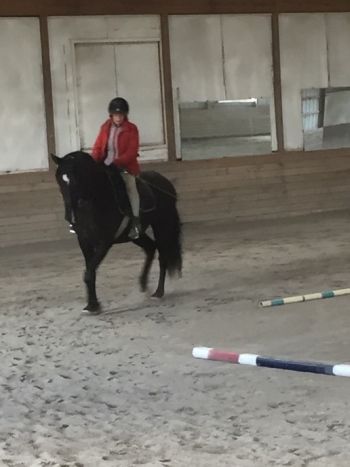
Here we see the horse engaging the inside hind but showing the tendency to load the inside shoulder.
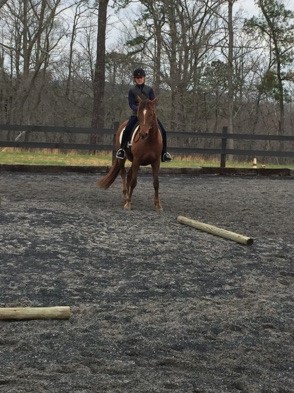
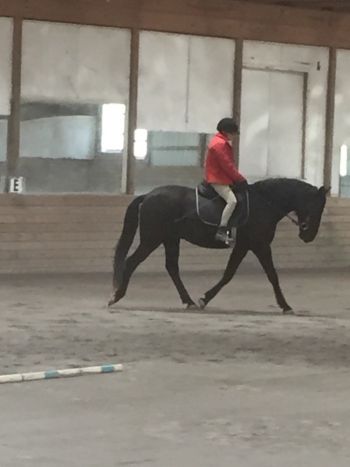
In this photo the horse is yielding the inside shoulder as the inside hind starts to comes under.
The next step is to connect the horse to the outside rein while maintaining the yield of the inside shoulder. The shape of the poles is great for the rider to realize what is happening. We often hear our instructors telling us what is going on but the visual image of the poles can make all the difference in understanding the mechanics.
Riding a circle on the square
In my teachings, I see horses that fall out on one part of the circle and fall in on another part (usually the opposite side). Telling the rider what is going on in a lesson is important but having the benefit of the poles in the shape of the square to help the rider understand is very useful.
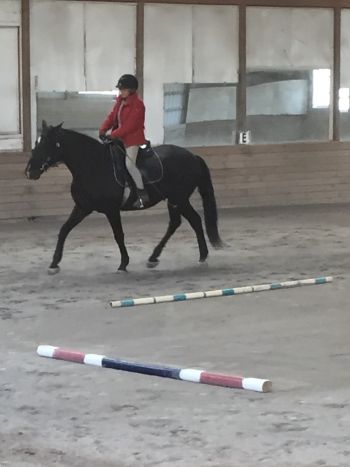
Here we see the horse falling in on the circle
And beginning to pick up the inside shoulder
Lifting the inside shoulder leads to the connection of the inside leg to the outside rein, creating roundness through the horse’s back.
Working on a square is very important for perception and application.
Thank you to Kim Harpster and Lola, Kingsley Edwards and Dante de Luar, and Heidi O’Connor for your contributing photos as well as Carole Novitske for the use of her wonderful horse Amante.