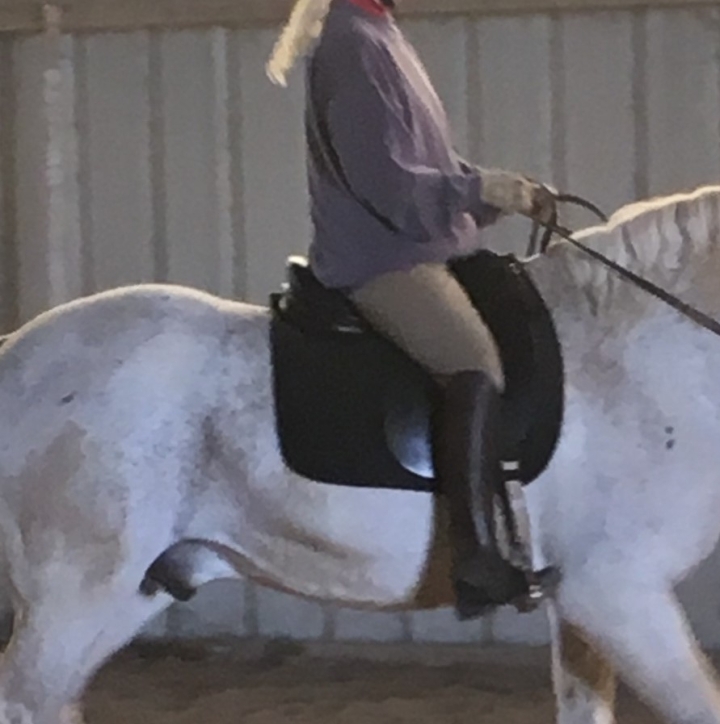
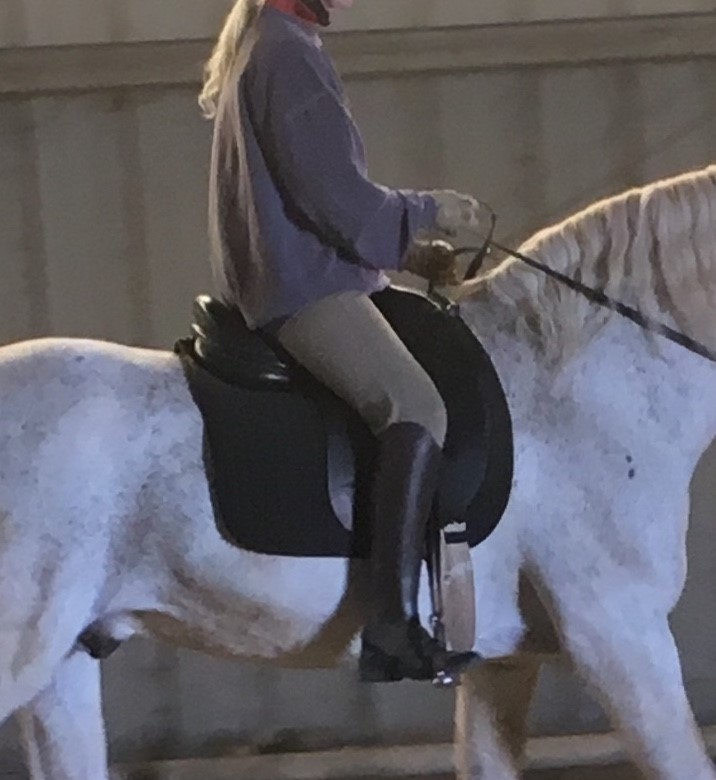
The seat is the main communication with our horse. I am sure we have all heard that, but how do we find a good seat?
First, we have to look at the mechanics of the horse and how they need to travel to carry weight comfortably. Energy is created in the hind legs, it travels through the rib cage to the withers, out the neck, and into the hand, then recycles. This allows the horse to use its topline and to lift the back, this is critical to carrying weight.
The instinct of humans when they ride is to close the knees and thighs and tip forward. We do not think about this, it just happens. If we refer back to the mechanics of the horse, by closing our thighs we block the energy from coming through the rib cage and out the neck.
Another problem with closing the thighs; it changes the angle of our hips in the saddle. In order for the horse to come through the topline, the hip angle has to indicate up, not down.
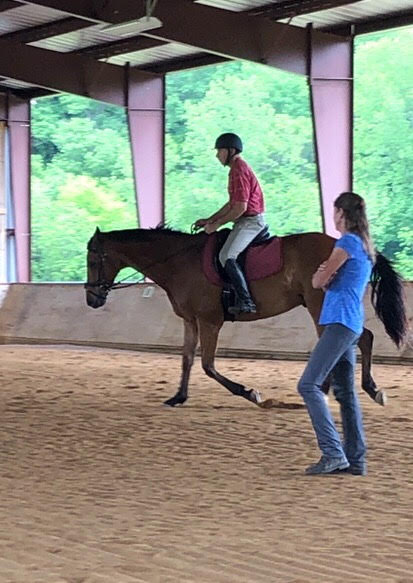
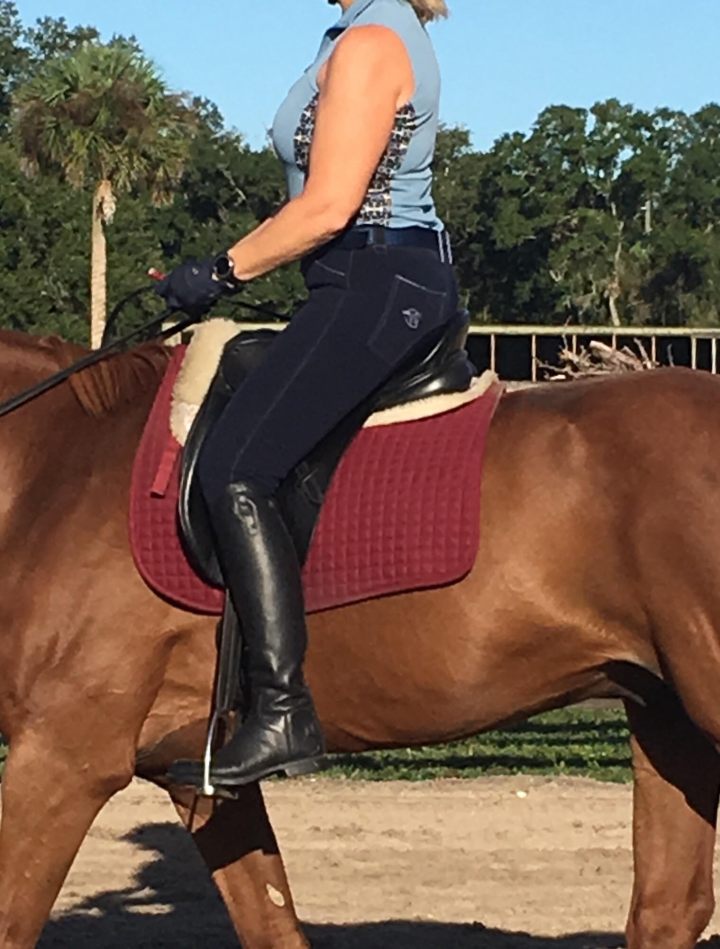
These next pictures show this: This first one is a closed position
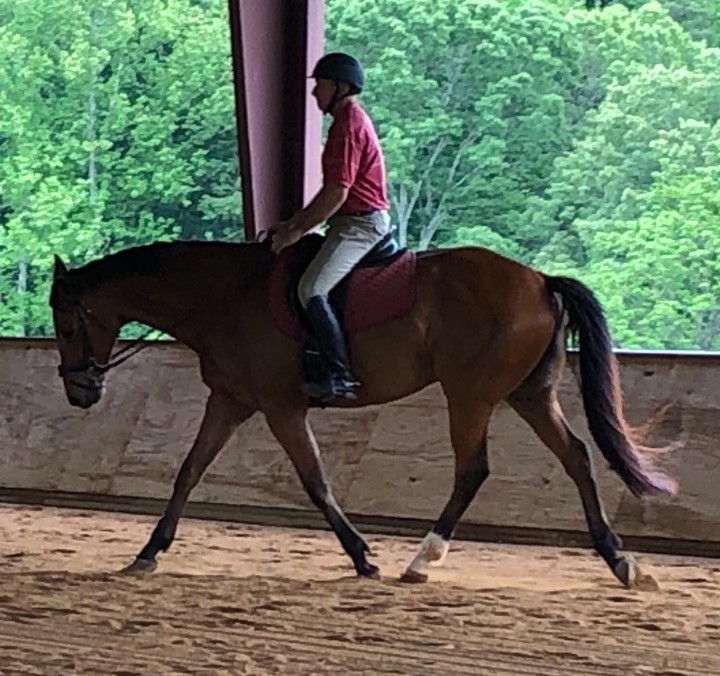
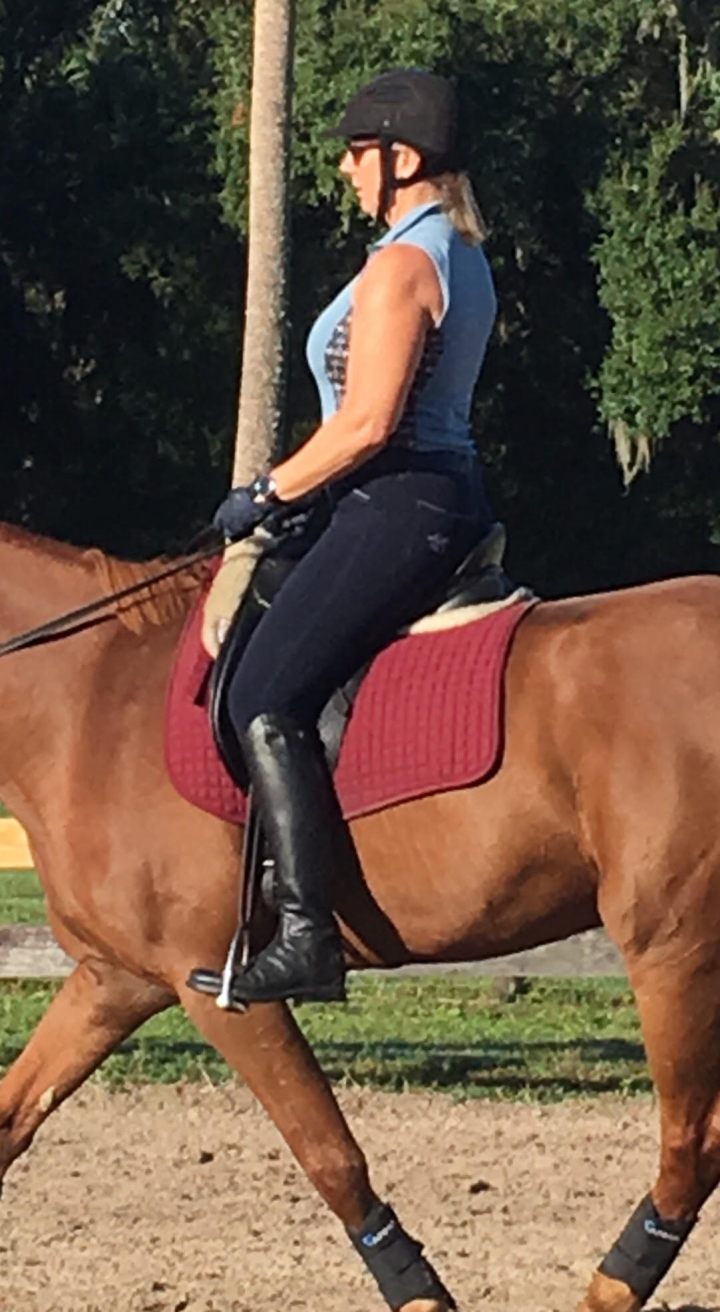
The second is a more open position
From these pictures you can see, how we sit effects the balance of the horse.
Here are a few examples of closing the thighs vs opening the thighs. In the first picture, the hip angle is closed and pointing down, toward the horses front feet because the thighs are closing in. The second, the hip angle is more up because the thigh is open, placing the rider on their bottom.
In the first position you can see the lower legs has come back and the rider is sitting with the tailbone toward the back of the saddle. In the second position, the leg is long with the tailbone more under. It is from this position that we can find our balance and allow the horses’ energy to come through.
The closed position will not encourage lift but rather, down on the forehand (we can see that in the previous pictures). It is why many horses have a hard time going forward (or rush forward); the energy is being blocked by the position of the riders seat. The first step in finding a good hip angle starts with the leg. If the leg has contraction it will most certainly effect the seat, no matter how much you try to change it.
Let’s look at some different problems with the leg and how to solve them.
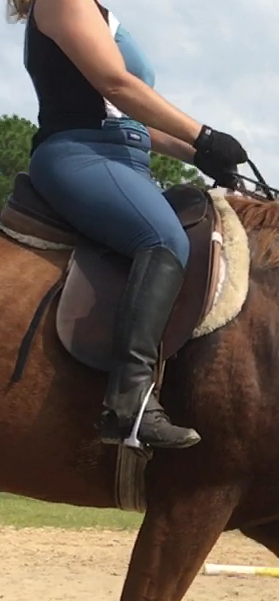
This first rider has brought her knee and thigh in which has closed her hip angle, pushing her to the back of saddle (closed hip angle) and shortening her leg.
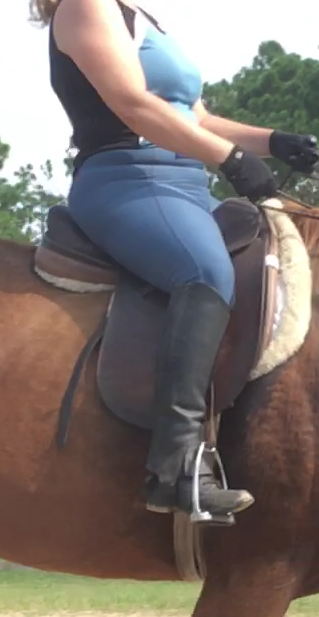
Here is later in the lesson
She is now more on her bottom with a more relaxed leg.
What we did: I started with a discussion of what part of the thigh should be on the saddle, since we know the natural human tendency is to close the thigh, practicing an open thigh and placing the back of it on the saddle starts to open the hip angle. This action will naturally start to place the rider more on their bottom and less in the back of the saddle. The lengthening of the leg is a natural reaction to these changes!
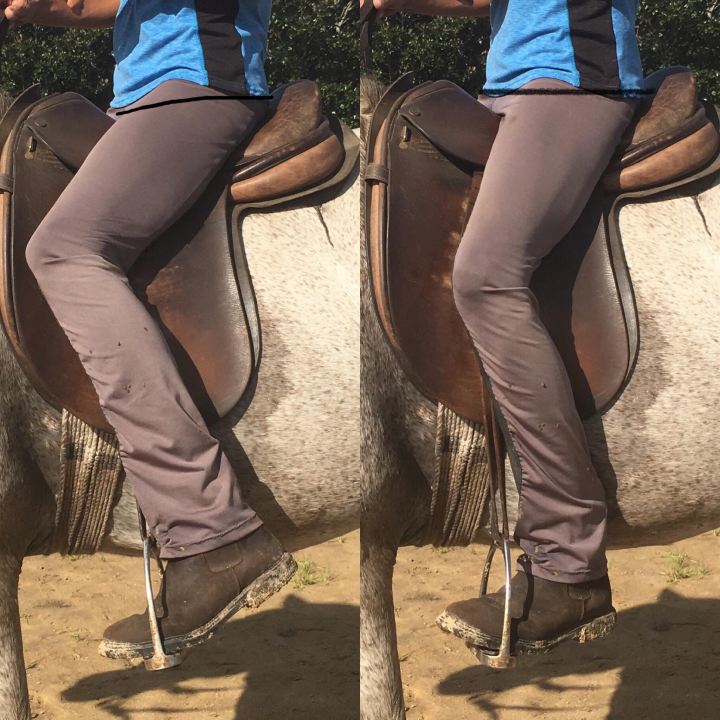
The second rider has done a good job of opening the knee and thigh but as we can see by the dangling stirrup, the leg is still shortening.
Here is the second photo
Now the leg is longer with her foot resting in the stirrup.
What we did: This student has worked hard to open the thighs and hips, the cause of the shortening of the leg is coming from the inner thigh (groin area). While she is not closing the knee and turning the thigh in anymore, the thighs are still closing. This has the effect of lifting the seat out of the saddle, it is the reason for the dangling stirrup. This of course also effects the seat and the ability to follow the horse. Targeting the area that is causing the problem is key, then you can start to change it.
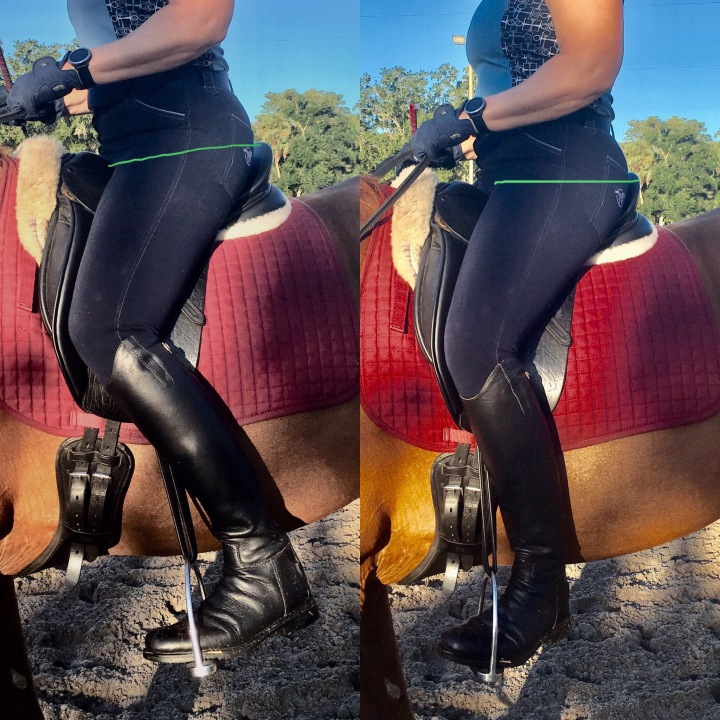
The 3rd rider is a long time student
Her hip angle is good and she is not closing her thigh but her leg has come out in front of her.
Second picture
Her leg is now under her to support her upper body.
What we did: Since her hip angle is good and she is not closing her thighs we have to address the leg staying under her hips. Once we find a good hip angle it is very common for the rider to lose the lower leg forward, it’s the reason as riders we instinctively close the hip angle in the first place. To correct this we have to think of bringing the upper thigh back toward the horses’ tail by opening the hip. We maintain this position by supporting ourselves with the upper calf. This is the position that allows us to follow the horse with our seat.
It is important to assess your own tendencies, understand what you are doing by instinct that isn’t working and then retrain yourself to maintain a position your horse can be free to do what they are asked. It is hard at first, but with practice it becomes something you don’t think about. This allows you to focus on strengthening your horse and move toward your goals.
As always, do not hesitate to reach out should you need input.